Ecoliteracy is the capacity to understand ecological systems and apply that knowledge to live, learn, and act in holistic, wise, and compassionate ways that sustain life and societies. It goes beyond environmental awareness, fostering a deep recognition of our interconnectedness with all life
As ecological insights necessitate holistic education for system change, ecoliteracy profoundly challenges modern cultural norms and mainstream education, including creative practice education. Since 2019, Haumea Ecoversity has pioneered transformative ecoliteracy education in Ireland, aligning with the global shift toward holistic, life-sustaining education.
Founded by ecological artist and educator Dr. Cathy Fitzgerald (Ireland) and philosopher Dr. Nikos Patedakis (California), Haumea Ecoversity is a real-world-tested model of eco-pedagogy. Collaborating with eco-poet and writer Grace Wells and more recently with community artist-architect Philip Ryan, we’ve supported 400+ professionals—creatives, changemakers, educators, and leaders—since 2019.
Our model draws on holistic thinkers, Indigenous wisdom, and global movements reimagining education. As part of the Ecoversities Alliance, we join 400+ models in 40+ countries fostering situated, holistic learning.
We advocate for a caring, ecological worldview to address social and environmental challenges, expanding wellbeing to include planetary and intergenerational perspectives. Since 2020, we’ve promoted the Earth Charter’s vision and values. Cathy is an accredited Earth Charter ESD Educator and Focal Point Communicator for Ireland.
In 2026, we argued for integrating ecoliteracy and the Earth Charter into Ireland’s Draft Nature Restoration Law Plan, emphasizing that addressing ecological collapse requires a foundational shift in education, governance, and our relationship with nature.
A Paradigm Shift for Education
Pioneering systems thinkers Fritjof Capra and David Orr, who coined ecoliteracy in the 1990s, describe it as a holistic shift in thinking and being. This paradigm values all life as sacred, linking ecological integrity—healthy habitats—to care for future generations, social and economic justice, democracy, non-violence, and peace.
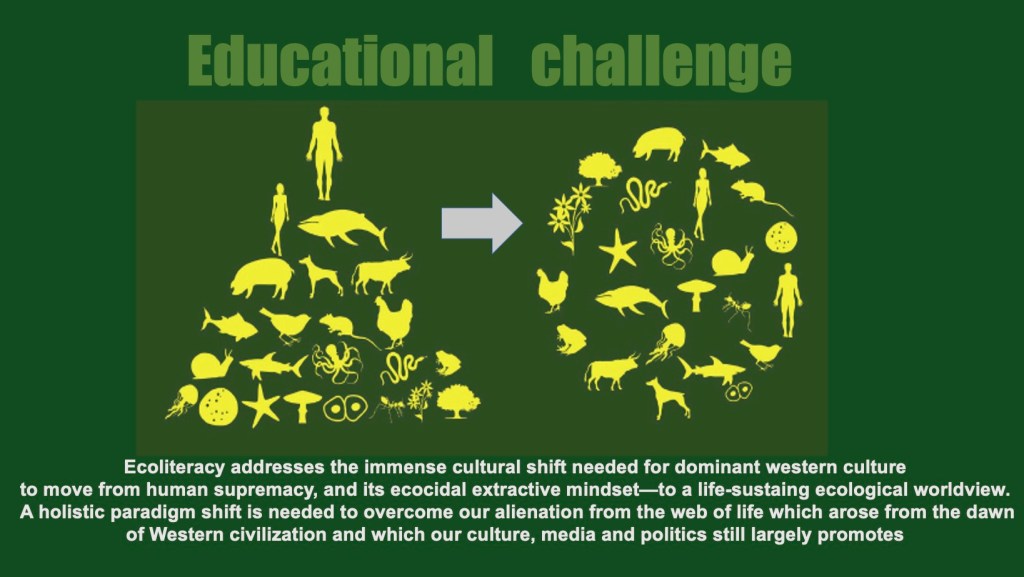
Ecoliteracy, or systems thinking, challenges the human-centric, economic priorities of modern culture. As cultural historian Thomas Berry recognized, it demands reimagining education, law, and cultural goals—shifting from individual success to the well-being of the entire Earth community and future generations.
Transforming how we learn and live
Ecoliteracy is more than adding ecological principles to curricula or setting sustainability goals—it’s a transformation in how we think, value, teach, learn, and live. This whole-of-institution and whole-of-society shift is essential for systemic change to avert ecological and societal collapse.
Yet, this shift is challenging. Human-first, colonial, and economic-first ideas have shaped dominant culture for millennia and persist in media, policy, and society. Decolonizing these short-sighted trajectories requires humility and effort, recognizing that many life-sustaining, circular principles have long been practiced by Indigenous cultures.
As UN Secretary-General António Guterres stated in 2026:
‘Indigenous Peoples are bearers of cultures, knowledge, and ways of life that have sustained humanity for thousands of years. From the Amazon to Australia, and Africa to the Arctic, you are the great guardians of nature, a living library of biodiversity conservation, and champions of climate action.‘
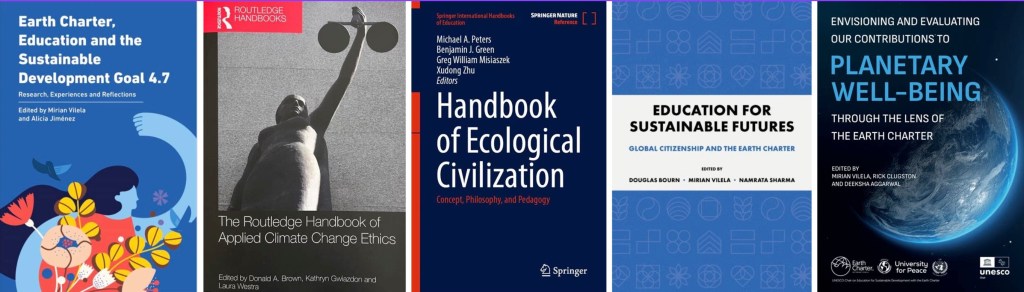
Ecoliteracy aligns with Education for Sustainable Development (ESD), Global Citizenship Education (GCE), the Inner Development Goals, and the role of creativity in fostering inclusive community engagement. Attending to inner life and self-care (spirituality) is foundational to holistic education and collective action, cultivating a cosmo-ecological worldview, deep belonging, meaning, purpose, and pro-social skills for the well-being of all people and the communities that sustain us.
Creativity inclusively activates Cosmo-Ecological Wisdom
Dr. Cathy Fitzgerald’s ecoliteracy journey began in the mid-1990s, as she explored creative ecological art practices to advocate for Close-to-Nature continuous cover forestry in Ireland—a sustainable alternative to colonial-industrial clearfell plantations. Her work reimagined forestry to prioritize environmental, social, and intergenerational wellbeing alongside economic benefits.
This experience shaped her PhD, The Ecological Turn (National College of Art & Design, Ireland), reinforcing ecoliteracy as life-affirming creative storytelling. As Thomas Berry recognized, it’s about sharing “a new story”—wiser ecological narratives rooted in local action. Relational creative practices across disciplines foster understanding: thriving interdependence nurtures individual wellbeing, social resilience, and trust, all vital as eco-social challenges grow.
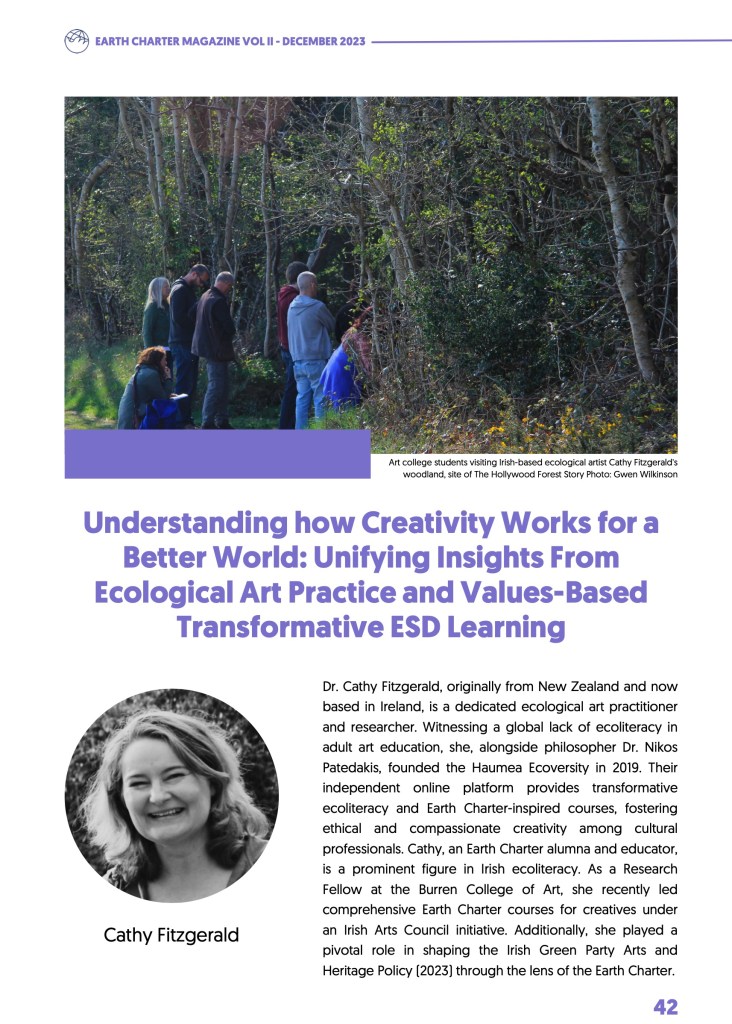
Cathy was nominated during her PhD viva to become a professional member of the International EcoArt Network and has drawn inspiration from pioneering ecological artists Helen and Newton Harrison, whose work models holistic, transformative community practices for habitat restoration. Importantly, and still under-acknowledged, their approach aligns with the global shift in education, as Cathy demonstrated in her 2023 Earth Charter article, that highlights parallels in pioneering ecological creative practice with sustainability pedagogy. She argues that participatory, dialogical, and place-based creative methods, developed over years with communities, embody holistic ecoliteracy education.
Through decades of reviewing and facilitating ecoliterate creative practitioners, Cathy shows how inherent creativity is essential in fostering this new holistic model of education and circular living for life-sustaining societies.
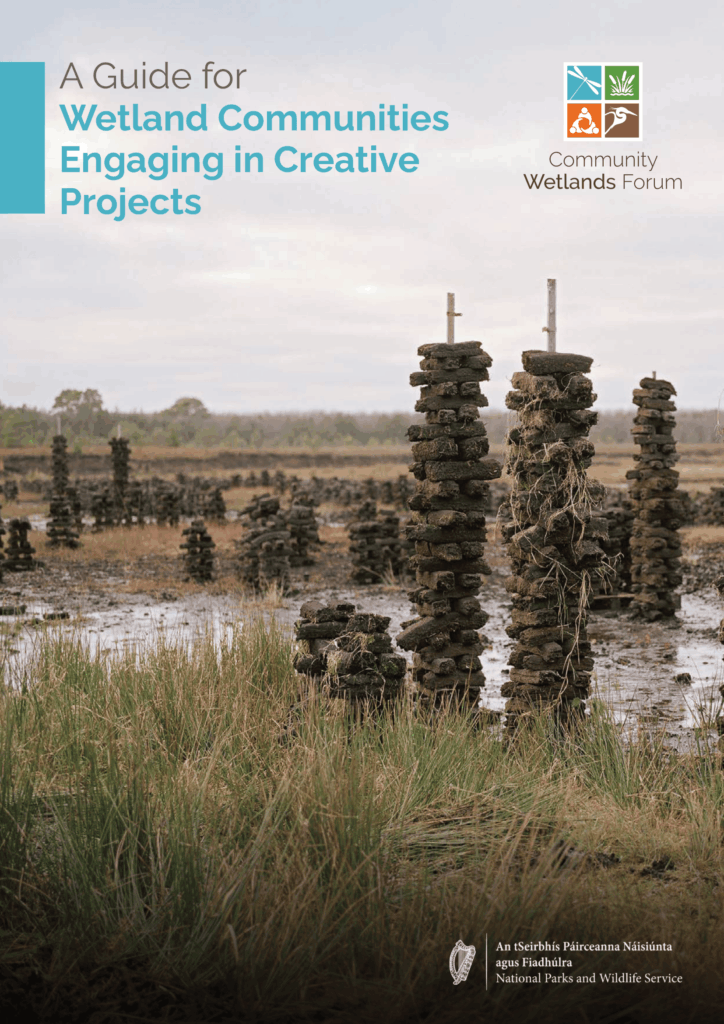
Ecoliteracy for creatives involved in community engagement for wetlands in Ireland
Cathy Fitzgerald’s contribution in providing ecoliteracy for Arts Offices and Creative Ireland programmes, to upskill creative professionals in Counties Carlow, Kildare, Meath, Wexford, Roscommon and Kilkenny, was noted in this new 2026 guide, launched by Minister Christopher O’Sullivan at the Irish Museum of Modern Art.
Ecoliteracy and the Earth Charter for Irish Local Authorities
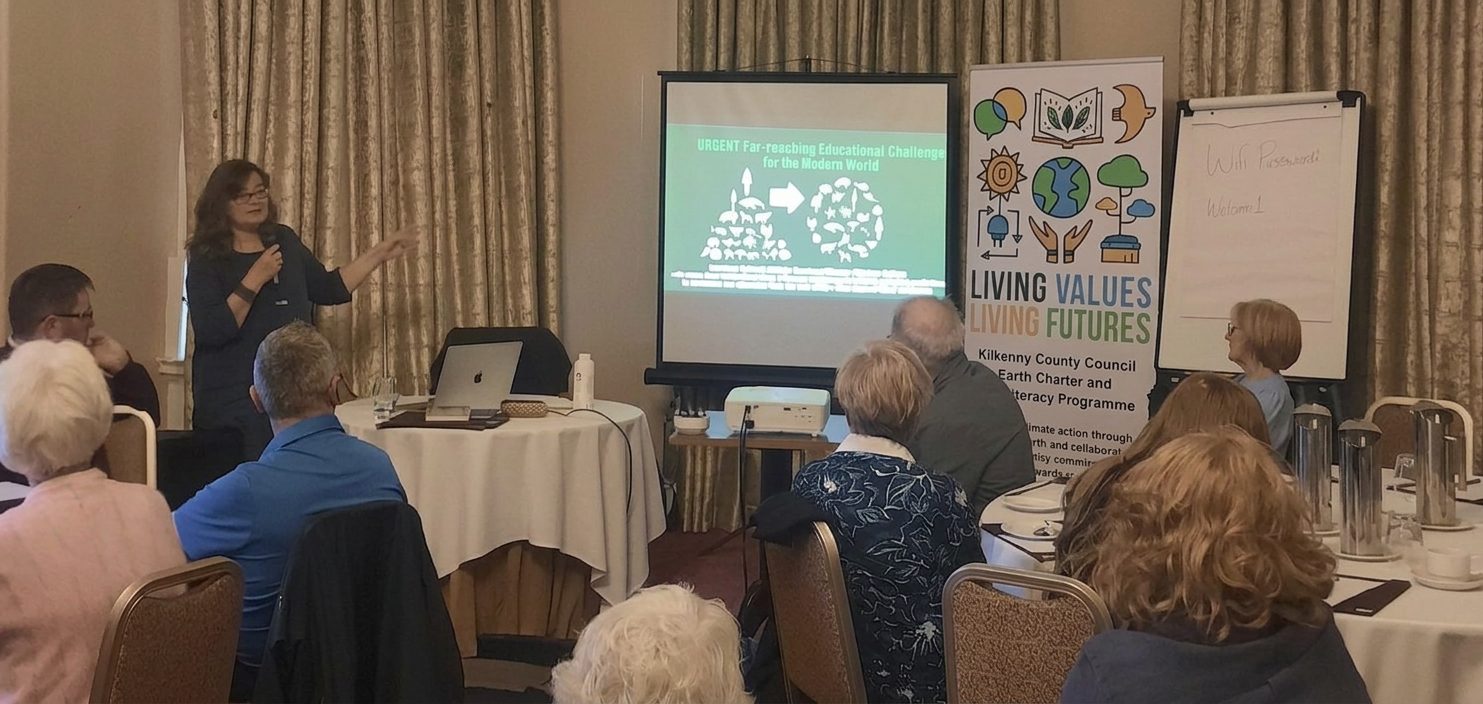
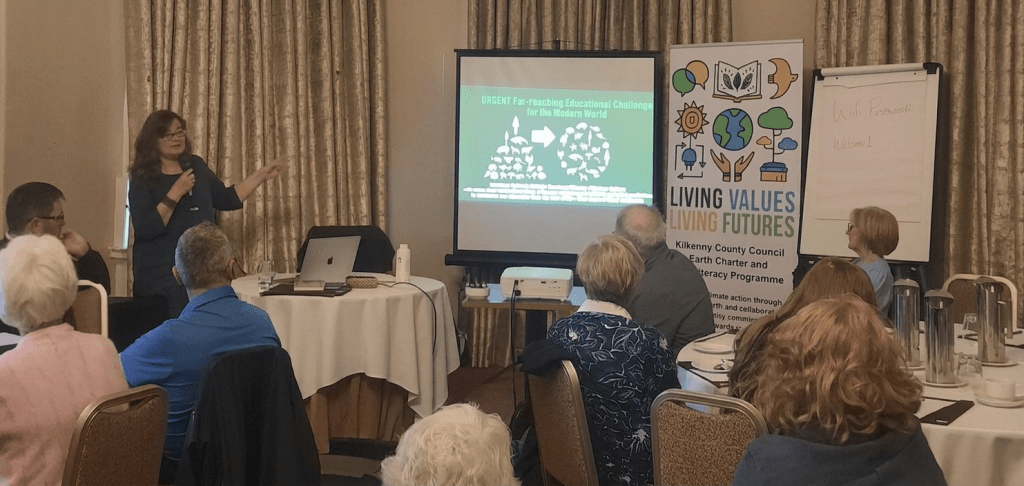
Cathy and her trusted co-facilitators have worked to bring ecoliteracy training and holistic education grounded in the Earth Charter to Irish Local Authorities: Carlow, Kilkenny, Kildare, Meath, Wexford, Roscommon since 2022.